
Table of Contents
Best alternatives to Apollo

Apollo.io is a tool with a lot of capabilities. I have mostly used Apollo as a lead database, but it also runs email outreach, hosts a light CRM, and offers a dialer inside the same seat. That surface is impressive on paper.
In practice, most teams I have worked with end up using Apollo for one job and use more specialised tools for the other:
- The lead database is genuinely useful.
- The outreach engine is ok but the deliverability is not, so you would need a dedicated deliverability tool like Warmup Inbox.
- Using Apollo as a CRM is doable but not the best if you have a lot of inbound leads.
So when you look for alternatives to Apollo, you are not really looking for one product. You are looking for a lead database or an outbound engine. I will look at both in this article.
Selection criteria for a lead database
Before we get into the tools, here are the five criteria I use to compare B2B lead databases. Everything downstream flows from these.
- Data quality: how fresh the records are, how often the vendor re-verifies, and what your realistic email bounce rate looks like after export. Cheap data always gets more expensive once you factor in wasted send volume.
- Email and contact coverage: the depth of contact information on each record. Are you getting verified business emails, mobile phone numbers, direct dials, or only firmographic?
- Segmentation capability: how granular the filters go. A database with 200 million contacts is useless if you cannot filter to the 500 that actually match your ICP.
- Intent signals: firmographic filters are nice, but the best for hyper-targeted leads is to monitor sales signals like job postings and fundraising.
- CRM integration: native sync with HubSpot, Salesforce, Pipedrive, Attio, and the other CRMs you actually run. Bidirectional beats one-way, and field-level control beats a big JSON blob.
- Workflow integration: how well the database plugs into the rest of your stack. Chrome extension quality, webhooks, API depth, Zapier or n8n, and of course MCP.
Alternatives to Apollo for lead database
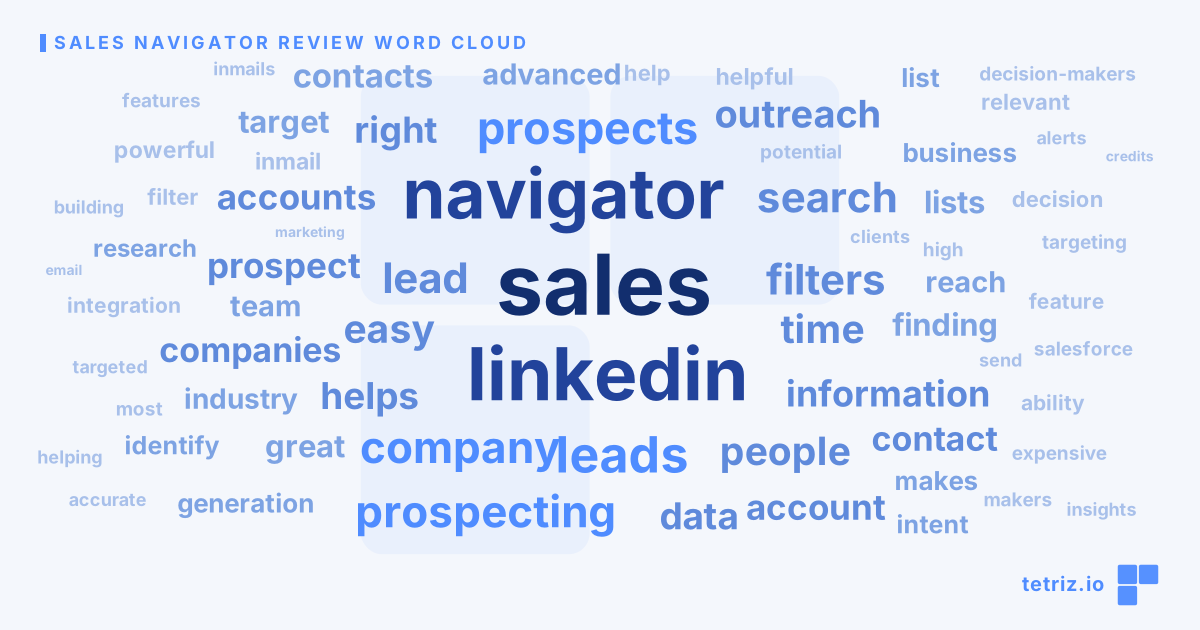
Sales Navigator, from $99/user/mo
Let’s be honest, most of Apollo data comes from LinkedIn, so why not get data directly from the source?
Apollo will hand you 500 verified emails today from cached data. Sales Navigator will hand you 500 live profiles with fresh job titles, recent posts, and a shared connection you can name in the first line of your message.
In practice, a lot of sales teams combine Apollo and LinkedIn together:
- Search inside Apollo first to check the size of each segment and prioritise which segement to outreach first.
- Use Sales Navigator to get live data, potentially.
If you want to scale that pattern beyond manual clicks, you will need automation like PhantomBuster or one of the other tools in our roundup of the best LinkedIn automation tools.
Key Features
- Live LinkedIn data (job changes, new posts, shared connections) refreshed the moment a prospect updates their profile.
- Advanced Boolean filters (role, seniority, function, geography, headcount, growth signals).
- Account Maps that visualise the buying committee inside a target account.
- Saved searches and lead lists with change alerts.
- Deep signal tracking (posts, job changes, hiring intent, engagement).
Best for teams whose primary channel is LinkedIn outreach and who want the freshest profile data on the market.
Watch for credit-limited InMails and pricing, which increase quickly as you add seats. Check out our Sales Navigator pricing guide for more on the topic.
Pricing starts at around $99 per user per month for the Core tier, with Advanced and Advanced Plus tiers climbing well past $150 per seat.
Clay, from $149/mo
Clay is not a like-for-like Apollo replacement. It is a data enrichment and workflow engine. Clay is extremely “flexible” because Clay does not lock you into one database. Clay credits give you access to multiple 3rd-party providers. Plus, you can use the workflow logic to easily run waterfall enrichment.
If you have a RevOps or GTM engineer on the team, Clay is a serious upgrade over Apollo’s built-in enrichment. You still need a lead source (Sales Navigator, an ICP list, a website visitor stream), and you still need an outreach tool downstream. Clay is the layer that turns raw records into something worth sending to.
Key Features
- Waterfall enrichment across 50+ data providers, ordered by your logic.
- Native AI research agent that can browse a website, summarise a company, or score a lead against your ICP prompt.
- Table-native interface that feels like a spreadsheet but runs like a workflow engine.
- Deep integrations with HubSpot, Salesforce, Attio, Pipedrive, plus webhooks and API triggers.
- Chrome extension for one-click enrichment while browsing LinkedIn or a company site.
Best for technical or RevOps-led teams that already have an outreach tool and want a serious enrichment layer sitting between their lead source and their sequencer.
Watch for the credit model. Enrichment burns through credits faster than you would expect.
Pricing starts at $149 per month for the Starter workspace, with Pro around $349 and Enterprise custom. Credits are the real cost lever.
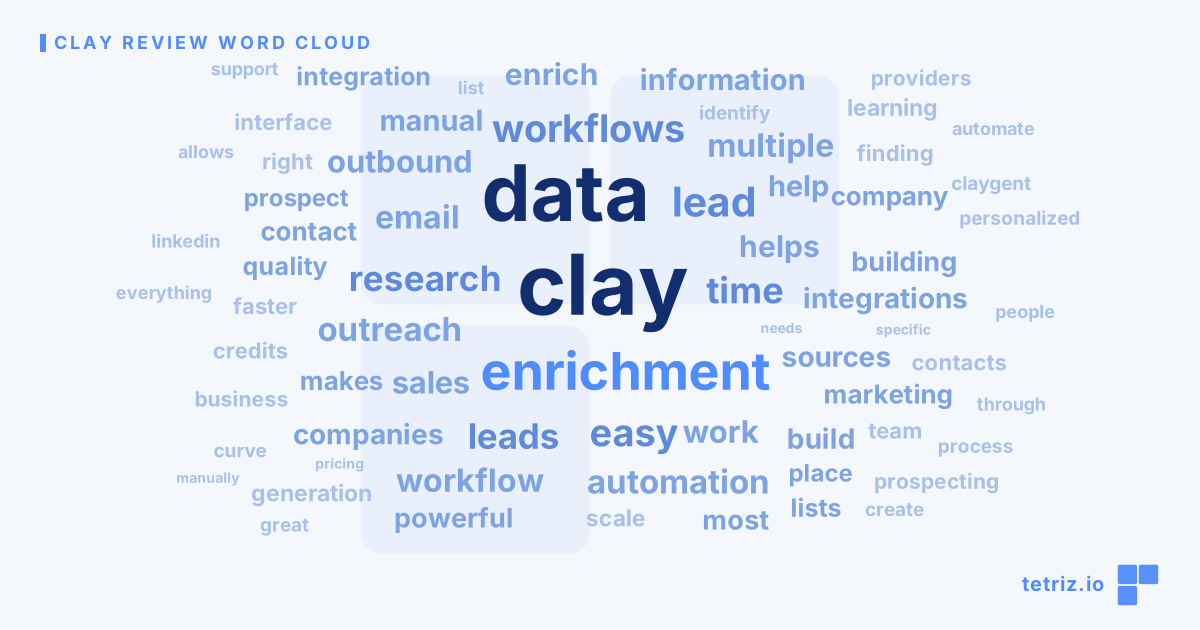
Check out our Clay review for more details.
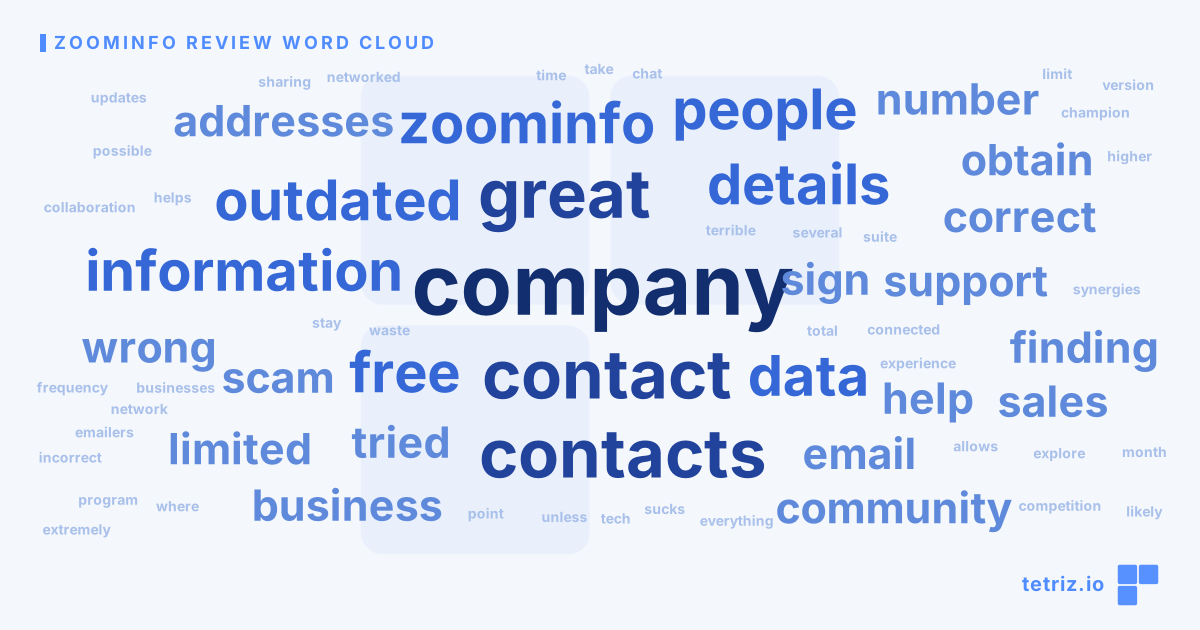
ZoomInfo, from ~$15,000/yr
ZoomInfo is the enterprise version of Apollo. And it is priced accordingly. There is no monthly plan and no self-serve checkout you need to talk to sales to get in.
Where ZoomInfo pulls ahead of Apollo is depth on any single account. Complex org charts show you exactly who reports to whom, which matters when your ACV is high enough that you need to sell to a buying committee. Where ZoomInfo lags is international coverage, especially in Europe and Asia, where Apollo and Cognism both hold their own.
Key Features
- Deep North American mobile number and direct-dial coverage.
- Company org charts with reporting lines and role-level intent signals.
- Proprietary intent data (Streaming Intent, ZoomInfo Copilot) that flags companies actively researching your category.
- WebSights website visitor identification.
- Native integrations with Salesforce, HubSpot, Marketo, and other enterprise stacks.
Best for mid-market and enterprise teams with high ACVs.
Watch for the contract structure. Multi-year commitments, seat minimums, and add-on modules stack quickly.
Pricing is sales-led and custom, typically $15,000 to $50,000+ per year depending on seats and modules. Annual contracts, often multi-year.
BookYourData, pay-as-you-go, from $99 per 1,000 credits
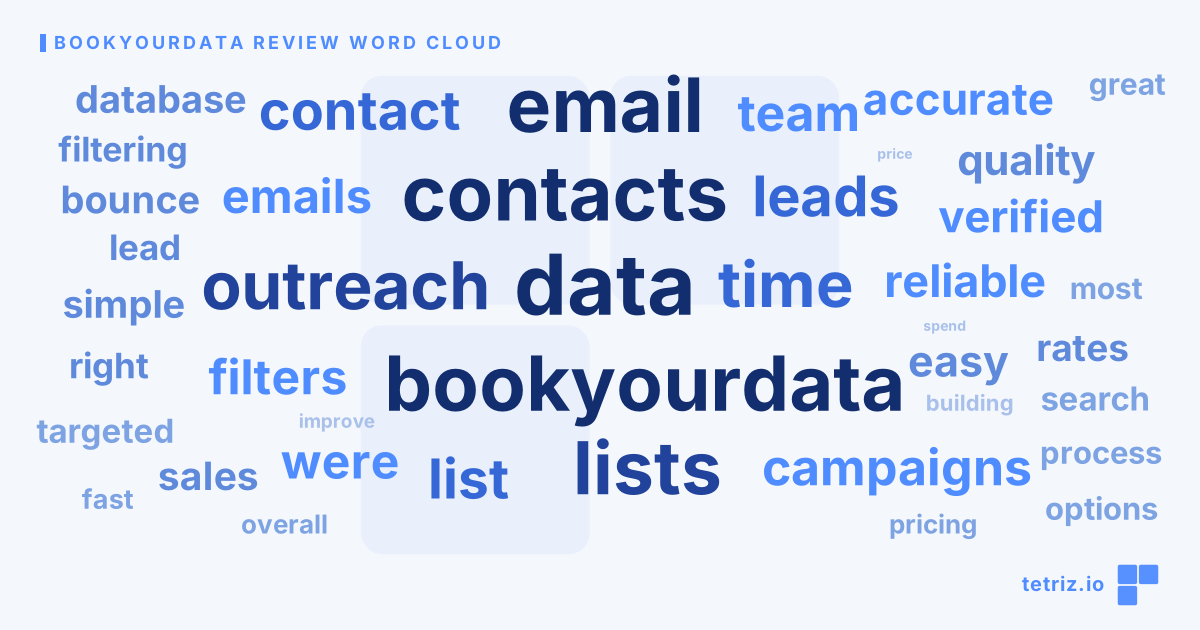
BookYourData positions itself as the accuracy-first pay-as-you-go database. Rather than lock you into a seat subscription, you buy credits and build lists on demand. Reviewers cite its verification process and the ability to build very targeted lists as the main draws.
For teams that only need a periodic list build, or for agencies who buy contacts for clients, the pay-as-you-go model can be more efficient than a seat-based tool. Just plan around the fact that BookYourData is a data provider, not a sequencer. You will still need an outreach tool downstream.
Key Features
- Pay-as-you-go credit model with no seat minimums.
- Multi-step email verification with a stated accuracy claim on the vendor site.
- Filter across role, industry, geography, headcount, and technology signals.
- CSV export first, with CRM integrations available.
- Free credits to test the product before paying.
Best for teams that run periodic list builds rather than a continuous prospecting flow, and agencies buying contacts on behalf of multiple clients.
Watch for variance in accuracy. Bounce rate can climb above 20 percent. Validate a sample before you buy a big list.
Pricing is credit-based, with entry packages around $99 for 1,000 credits and volume discounts as you scale.
Cognism, custom, typically $1,500+/user/yr
Cognism is the go-to alternative to Apollo and ZoomInfo when your prospecting in Europe. If you run outbound in the UK, DACH, or the Nordics, Cognism is usually the first name that comes up.
Reviewers praise data quality on European mobile numbers specifically, and criticize coverage in the US and APAC as thinner. Pricing is not published; you will need to talk to sales.
Key Features
- Verified mobile phone numbers, especially strong in EMEA.
- GDPR, CCPA, and DNC compliance.
- Intent data through Bombora and native signals.
- Chrome extension that enriches leads from LinkedIn and company sites.
- Integrations with Salesforce, HubSpot, Outreach, and Salesloft.
Best for teams selling into Europe with a phone-first outbound motion.
Watch for the price. Cognism sits at the premium end of the market, and reviewers regularly compare seat cost unfavourably to Apollo and Lusha for teams with a US-only book.
Pricing is custom and sales-led, typically starting around $1,500 per user per year with annual contracts.
Lusha, from $49/user/mo
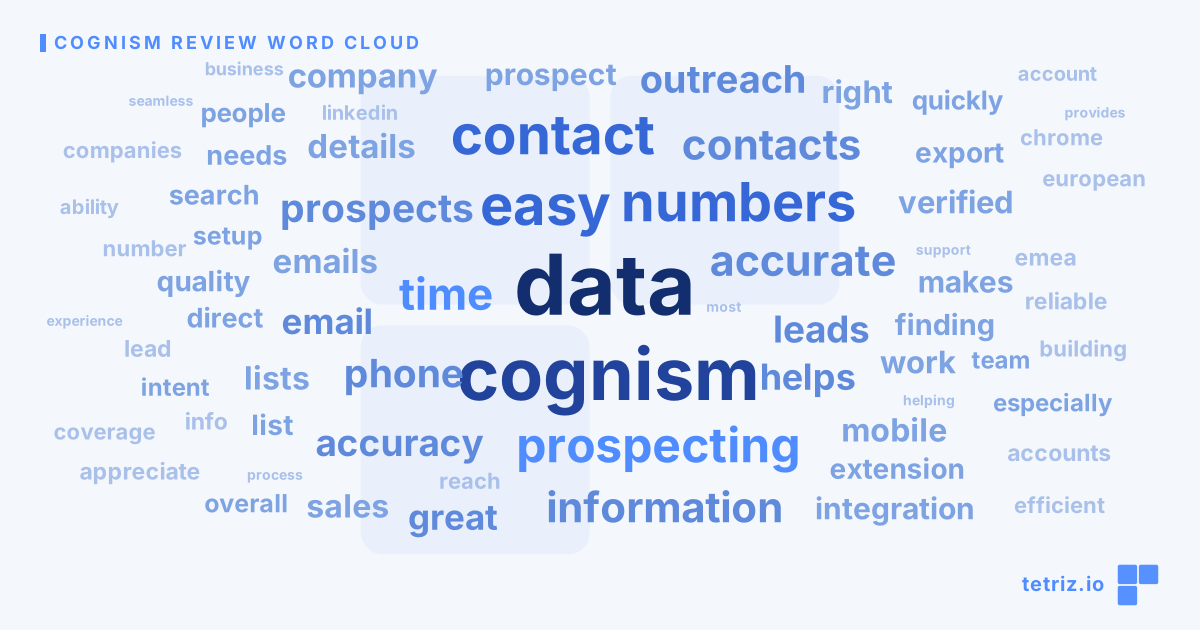
Lusha is the tool most reviewers reach for when they want accurate contact details fast and do not need a full outreach stack. The Chrome extension is the star: open a LinkedIn profile, click the icon, and get a verified business email plus a phone number without leaving the tab. It is the smallest possible footprint for a data tool, which is exactly the point.
If your outreach lives in a separate tool (Salesloft, Instantly, Lemlist, Smartlead), Lusha is a great complement. Reviewers praise accuracy in North America and Western Europe. However, niche industries and smaller companies can be hard to find.
Key Features
- Chrome extension for one-click contact reveal on LinkedIn and company sites.
- Verified business emails and direct phone numbers.
- Bulk enrichment through CSV upload or API.
- CRM integrations with Salesforce, HubSpot, Pipedrive, and Zoho.
- GDPR and CCPA compliance workflows.
Best for individual SDRs and small teams whose primary need is fast, accurate contact reveal on LinkedIn profiles.
Watch for the credit model. Lusha bills per contact reveal, and heavy prospecting weeks can chew through a monthly credit allowance in a day or two.
Pricing starts around $49 per user per month for the Pro tier, with Premium at roughly $79 and Enterprise custom.
6sense, custom, enterprise-first
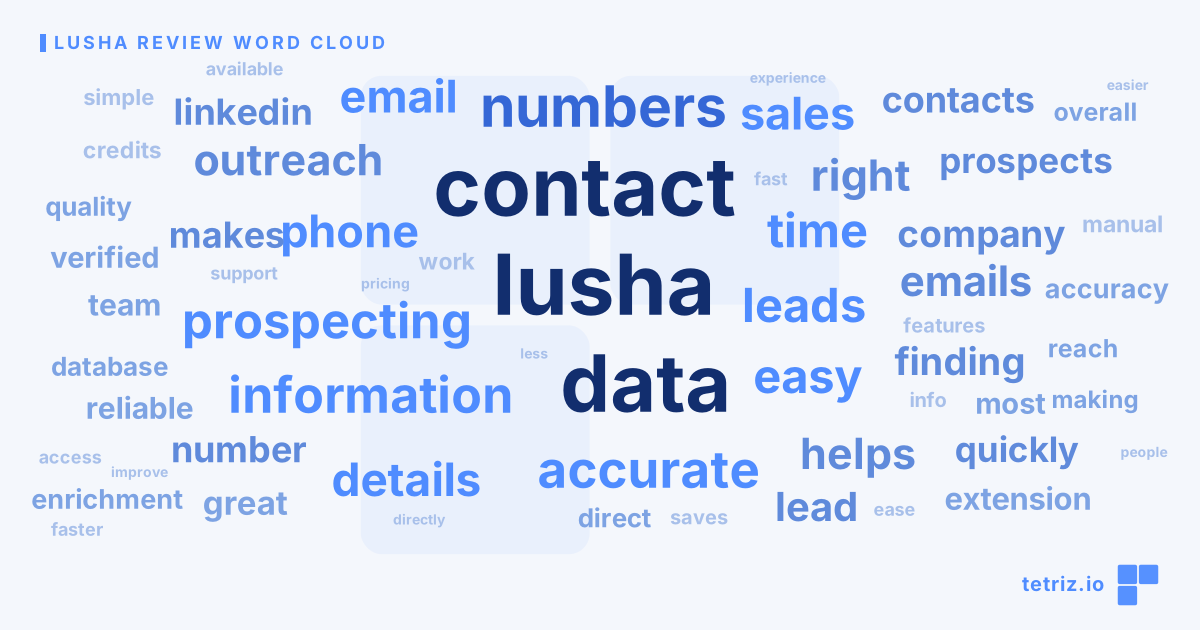
6sense is a different animal from most tools in this list. It is an account-based marketing and predictive intelligence platform, not a contact database in the Apollo sense. What 6sense sells is the ability to tell you which companies are in-market for your category right now, based on intent signals aggregated across the open web and its own data co-op. You then decide which of those accounts to prospect into using another tool.
Key Features
- Account-level intent data across the open web and 6sense’s co-op.
- Predictive account scoring based on buying-stage models.
- Segment builder that combines intent, technographics, and firmographics.
- Native integrations with Salesforce, HubSpot, Marketo, Outreach, and LinkedIn Campaign Manager.
- Website personalisation and web visitor identification.
Best for mid-market and enterprise B2B teams with long sales cycles where identifying in-market accounts drives the whole motion.
Watch for the learning curve. You need a clean CRM, a defined ICP, and a dedicated operator before the platform starts paying off. Teams that skip this groundwork rarely see the value.
Pricing is custom and sales-led, with annual contracts. Expect a five-figure starting point at a minimum.
LeadIQ, from $45/user/mo
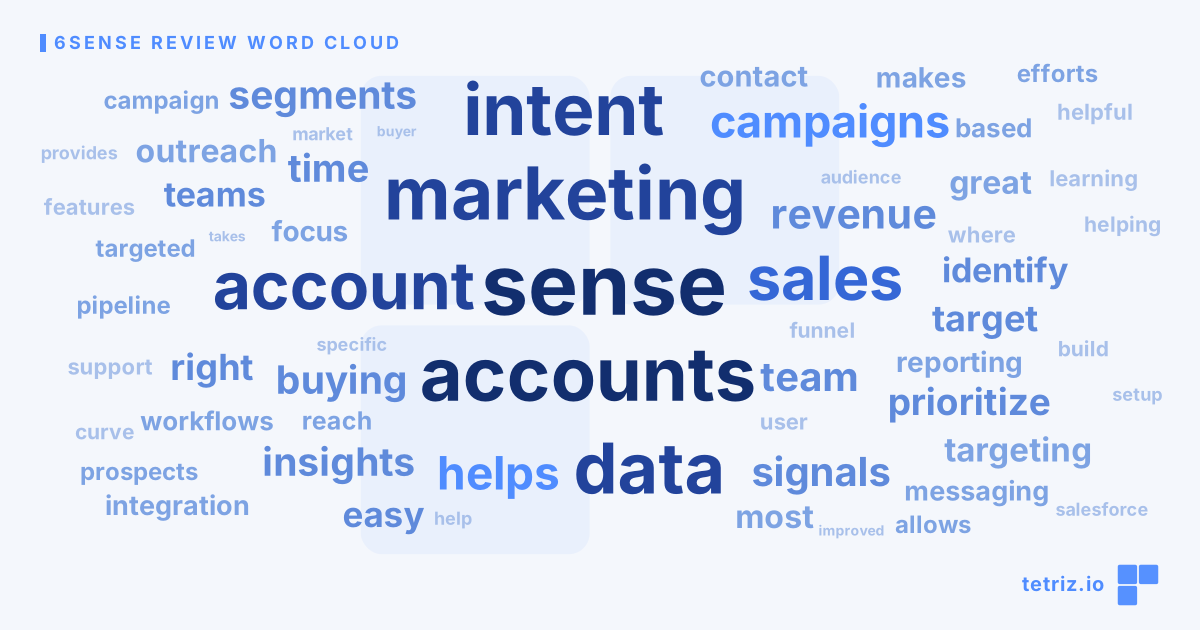
LeadIQ is a prospecting tool built around the Chrome extension (similar to Lusha). If Apollo’s contact reveal is your favourite feature but you dislike the surrounding platform, LeadIQ is the tool that isolates that workflow and does it better.
LeadIQ is a great combo with LinkedIn Sales Navigator. The database is smaller than Apollo or ZoomInfo, which shows up when your ICP includes small companies or non-North American geographies.
Key Features
- Chrome extension that captures leads from LinkedIn and company sites in one click.
- Real-time email verification on every capture.
- One-click push to Salesforce, HubSpot, Outreach, and Salesloft.
- Team-shared prospect lists and workflow templates.
- AI-generated first-line personalisation as a paid add-on.
Best for SDR teams whose primary prospecting motion runs through Sales Navigator and who want the fastest possible path from LinkedIn to CRM.
Watch for phone number coverage. If your motion is call-heavy, you may need a dedicated tool to find phone numbers.
Pricing starts around $45 per user per month for the Essential tier, with Pro at roughly $85 per user per month and Enterprise custom.
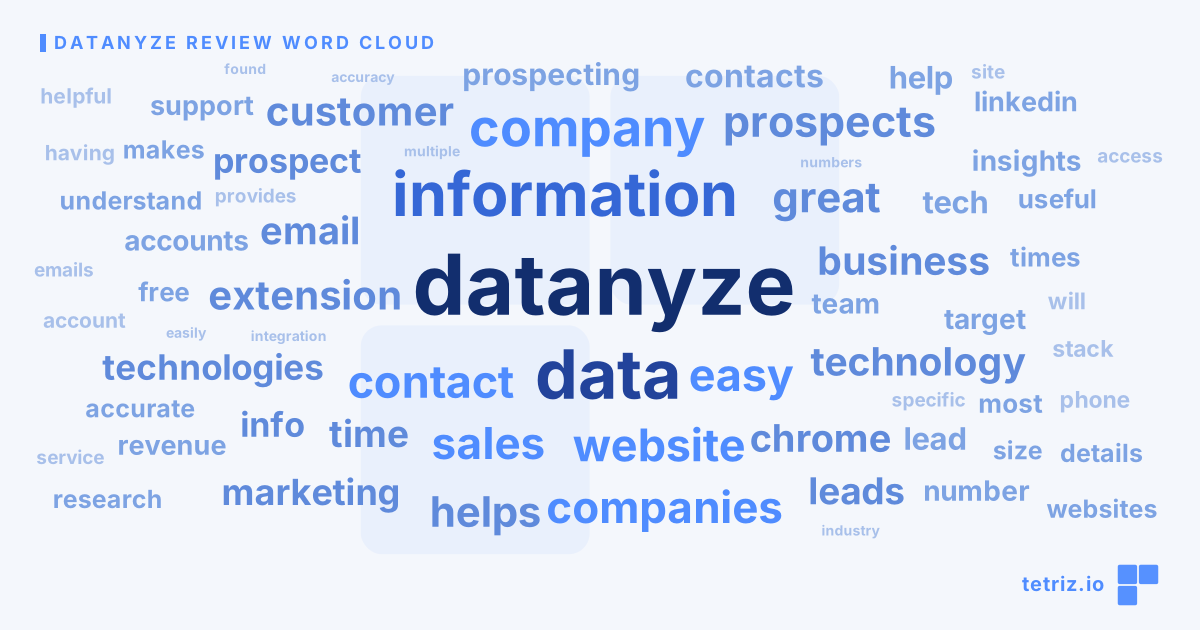
Datanyze, from $21/mo
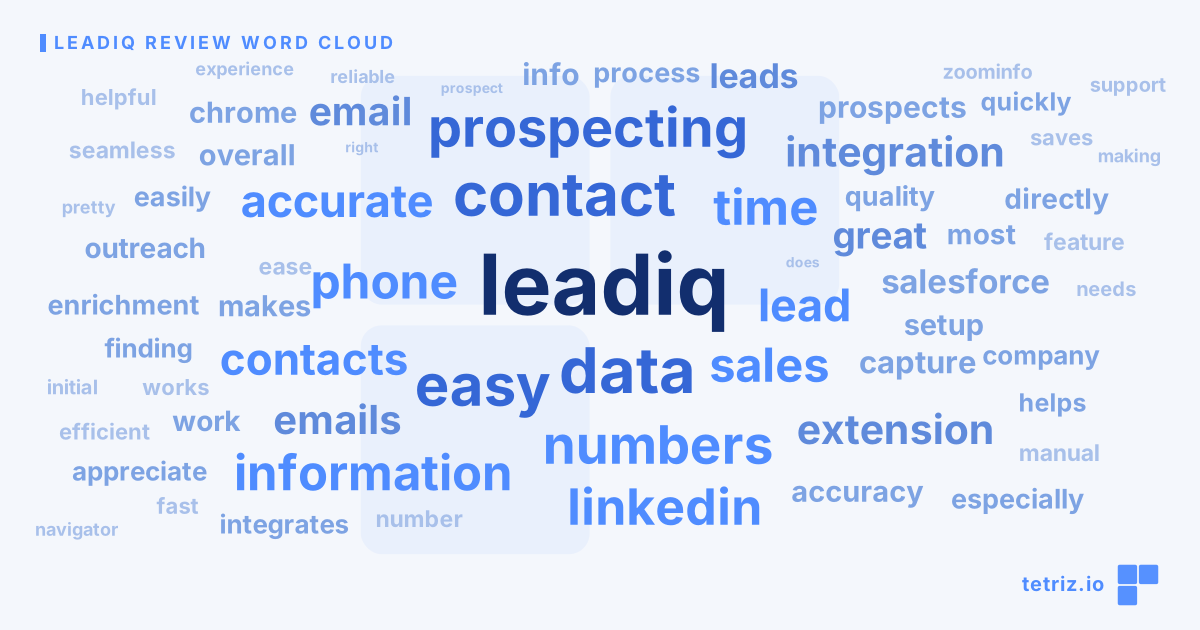
Datanyze is the specialist pick when your ICP is defined by the tech stack a company runs rather than its size or industry. The core product surfaces technographic data: which companies use Salesforce, which run AWS, which have deployed a specific analytics tool. You then export a list to your outreach layer.
Reviewers praise the Chrome extension and the interface, and criticize the total database size. If your pitch relies on the fact that a prospect uses a specific tool, Datanyze is a real differentiator. For general prospecting, it is thinner than the full-database competitors.
Key Features
- Deep technographic data across thousands of technologies.
- Chrome extension that reveals firmographics and contact info while browsing.
- Filter combinations across firmographics, technographics, and geography.
- CSV export and API access for downstream integration.
- Free credits every month on the entry plan.
Best for teams whose sales pitch is anchored on the technology a target account uses.
Watch for contact coverage outside North America and support responsiveness.
Pricing starts at $21 per month for the Nyze Pro 1 tier, scaling to $39 and $55 as you add credits. Enterprise is custom.
UpLead, from $99/mo
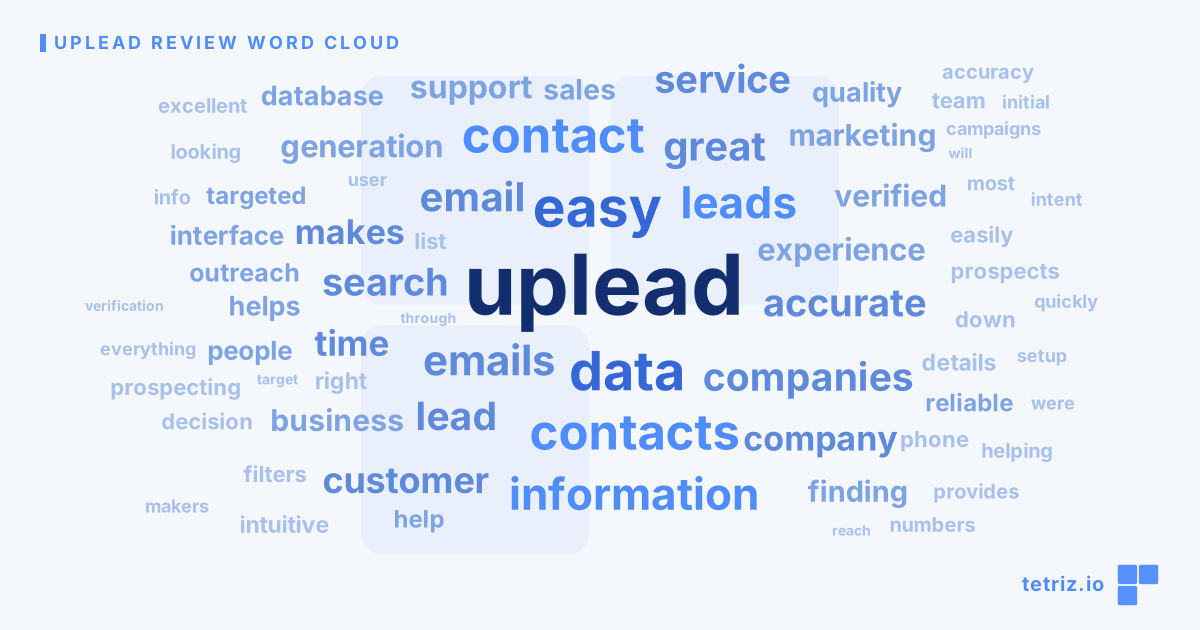
UpLead is focused on accuracy rather than volume. Reviewers consistently praise the bounce rate on UpLead lists.
UpLead is a pure data provider, not an outreach engine. You will use it to build lists and export them into your sequencer.
Key Features
- Real-time email verification on every export.
- Search across role, industry, technology, revenue, funding, and intent.
- Chrome extension for LinkedIn reveal and enrichment.
- Transparent pricing page with no minimum contract.
- Free 7-day trial with 5 credits.
Best for teams that prioritise low bounce rates.
Watch for the credit ceiling. Heavy list builds can hit the plan limit fast, and the auto-renew clause has caught users off guard. Read the terms.
Pricing starts at $99 per month for the Essentials tier (170 credits), with Plus at $199 and Professional at $399. Volume plans are custom.
Lead411, from ~$99/user/mo
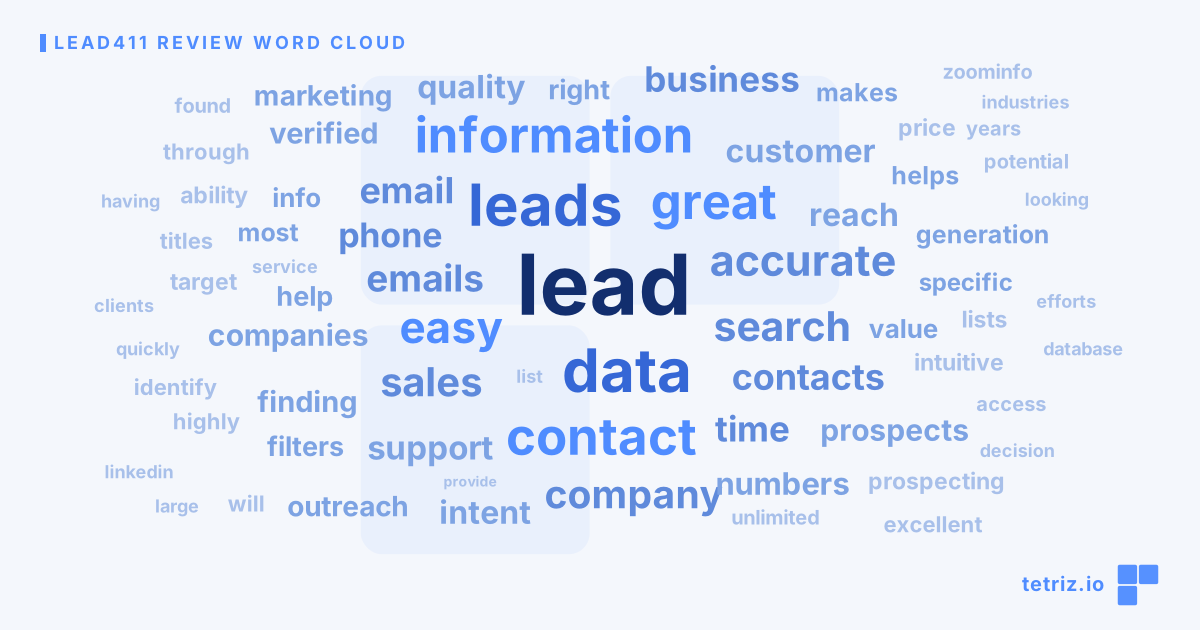
Lead411 focuses on data freshness. The vendor claims a shorter re-verification cycle than most competitors and, more importantly, layers growth-signal intent (companies that just raised, hired a new VP, opened a new location) on top of the standard firmographics. That combination makes it a strong pick when timing is part of the pitch.
Reviewers praise data accuracy relative to price and consistently recommend it over ZoomInfo for teams that cannot justify the enterprise contract. The gap shows up in coverage: Lead411 is thinner outside North America and in very small businesses.
Key Features
- Growth-signal intent (funding, hiring, expansion, new products).
- Frequent re-verification of contact records with a stated bounce rate under 5 percent.
- Chrome extension for LinkedIn reveal.
- Native integrations with Salesforce, HubSpot, Outreach, and Salesloft.
- Unlimited exports on higher tiers.
Best for mid-market sales teams whose motion depends on timing (funding events, hiring signals, expansion moves) more than on raw volume.
Watch for international coverage. If you sell into EMEA or APAC, Lead411 is a supplement rather than a primary source.
Pricing starts around $99 per user per month for the Basic Plus Unlimited tier. Enterprise is custom.
Crunchbase, from $49/user/mo
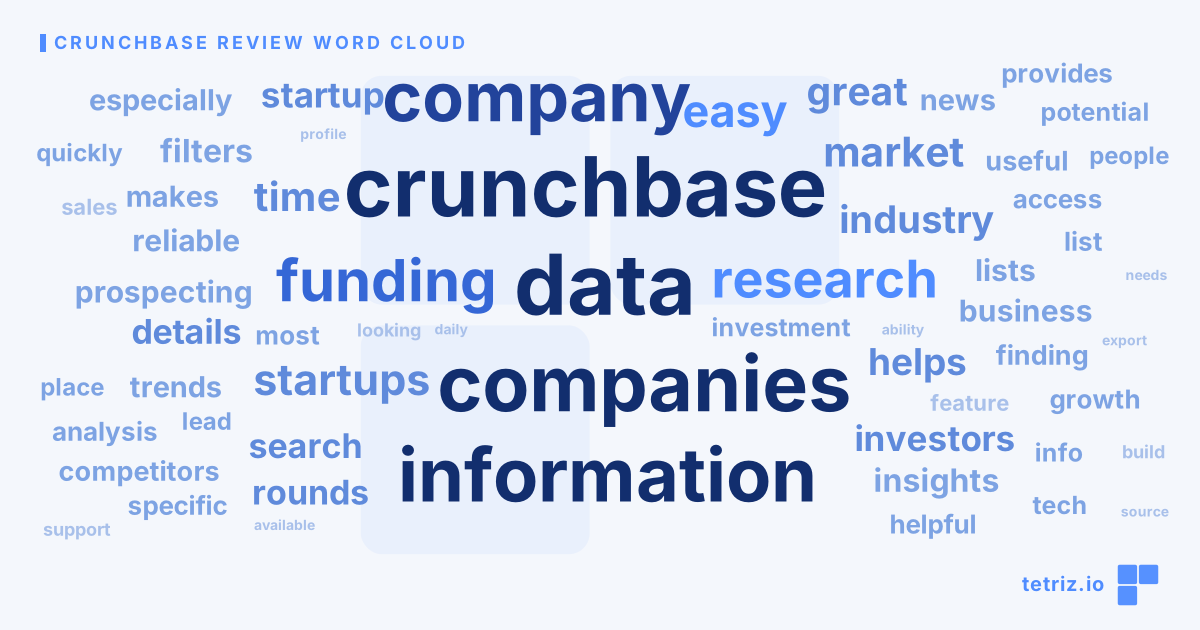
Crunchbase is not a sales tool in the Apollo sense. It is a company intelligence database with the deepest funding and investor data on the market, plus a lighter layer of firmographic and contact information on top. Sales teams use it to source targets by funding stage or growth signals.
Reviewers who get value are usually researching a market or building a target account list from funding data.
Key Features
- The most comprehensive private-company funding database on the market.
- Investor profiles and network graphs.
- Growth signals (funding, hiring, product launches, layoffs).
- List builder and CRM push (Salesforce, HubSpot).
- API access on higher tiers.
Best for teams whose target list is defined by funding stage, investor relationships, or growth signals rather than by role.
Watch for contact data depth. Reviewers routinely note that Crunchbase’s contact records are shallower than a purpose-built prospecting tool, and international company coverage is uneven.
Pricing starts at $49 per user per month for Pro, with Enterprise custom. There is a free tier for light research use.
RocketReach, from $19/mo
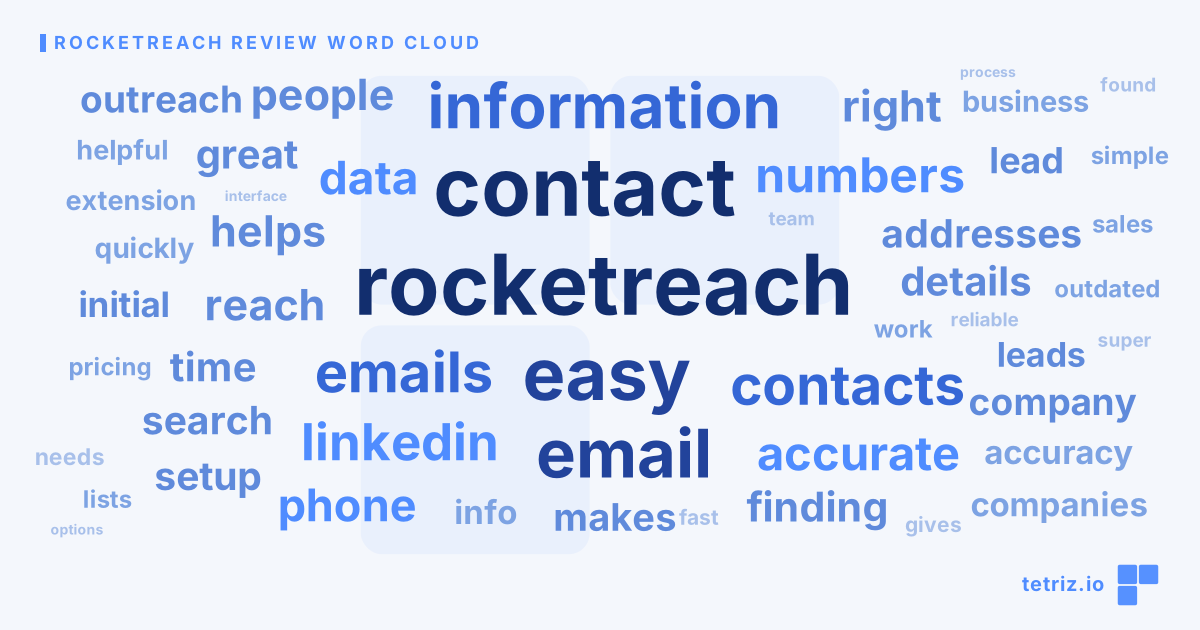
RocketReach is the volume-and-price play in this category. It claims one of the largest professional contact databases on the market and starts at a genuinely low monthly price.
The trade-off is depth. Direct dials and mobile numbers are less consistent than on Cognism or ZoomInfo.
Key Features
- Very large professional contact database (claims 700M+ profiles).
- Chrome extension for LinkedIn and company site reveal.
- Bulk lookup and CSV export.
- Native integrations with major CRMs and sequencers.
- Free plan with 5 lookups per month for testing.
Best for solo operators, agencies, and small teams that value price and scale over data quality.
Watch for email accuracy on smaller companies. Enterprise accounts are well sourced, but SMB records are lacking.
Pricing starts at $19 per month for the Essentials plan, with Pro at $59 and Ultimate at $99. Annual plans discount those numbers.
Hunter.io, from $34/mo
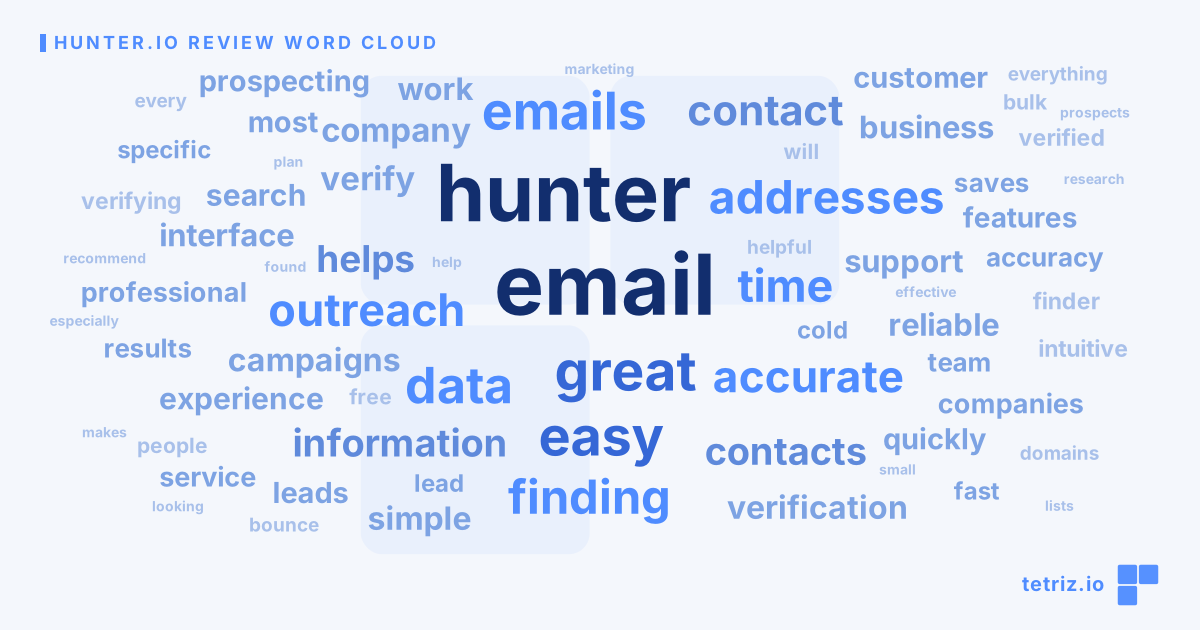
Hunter.io is the email-finder specialist. It does one thing well: given a domain, find the professional emails behind it and verify them.
The recent Campaigns feature adds light outreach sequencing on top of the finder, though it is not close to what Instantly or Lemlist offer.
Key Features
- Domain-search email finder with pattern detection.
- Real-time email verifier (single and bulk).
- Chrome extension for on-the-fly discovery.
- Light cold email sequencer for outreach.
- Free tier with 25 monthly searches.
Best for founders, solo operators, and lean teams.
Watch for the feature ceiling. Hunter is not trying to be a full outreach platform. When your motion grows beyond a few campaigns per month, you will outgrow it fast.
Pricing starts at $34 per month for Starter (500 monthly searches), with Growth at $104 and Scale at $349. Annual plans discount around 30 percent.
Snov.io, from $30/mo
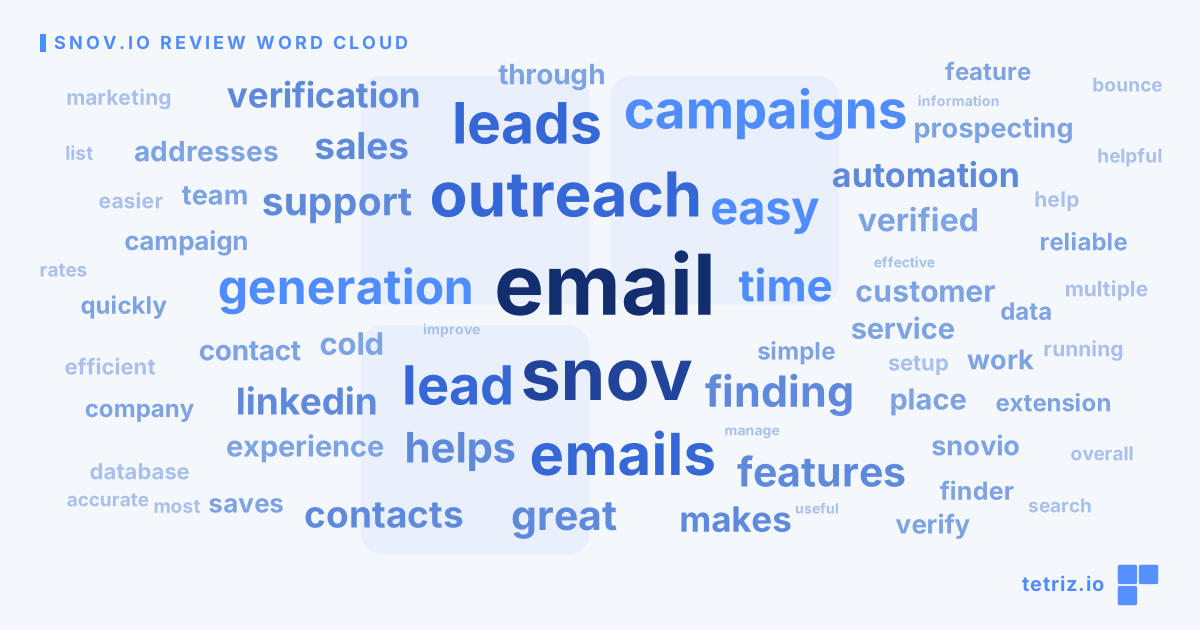
Snov.io is a hybrid: it ships an email finder, a verifier, an outbound sequencer, and a LinkedIn automation layer inside one seat. That combination is unusual in this list. Furthermore, the LinkedIn automation module is competitive with dedicated tools like Expandi. If you want the shortest path from “find emails” to “run a multi-channel campaign”, Snov.io is worth a serious look.
The LinkedIn features in particular have advanced enough that Snov earned a spot in our best LinkedIn automation tools roundup as a strong pick for teams that want email and LinkedIn under one roof.
Key Features
- Email finder and bulk email verifier.
- Built-in email outreach with deliverability tooling and warm-up.
- LinkedIn automation for connection requests, messages, and profile visits.
- AI-assisted lead search and lookalike list building.
- CRM integrations plus a light native CRM.
Best for small teams that want a single seat covering email discovery, cold email, and LinkedIn outreach.
Watch for the absence of phone data. Snov is email-first and LinkedIn-first. If your motion depends on outbound calls, you will need a second tool.
Pricing starts at $30 per month for the Starter tier, with Pro at $75, and Managed Service custom.
Selection criteria for outbound automation
The database problem is solved by picking one of the tools above. The outreach problem is a different Topic. Here are the five criteria I use when picking an outbound engine.
- Deliverability: how well the tool keeps your emails out of spam. Native warm-up, IP rotation, and inbox rotation are features to look for.
- Multi-channel coverage: Which can you use?
- Sequencing depth: How many touchpoints across how many channels can you use? How much conditional logic can you put in the workflow?
- Personalisation at scale: how far you can go beyond
{{first_name}}: AI personalisation, custom variables, and dynamic media. - Reporting and analytics: Available stats. Data aggregation for teams.
Alternatives to Apollo for outbound automation
Lemlist, from $32/user/mo
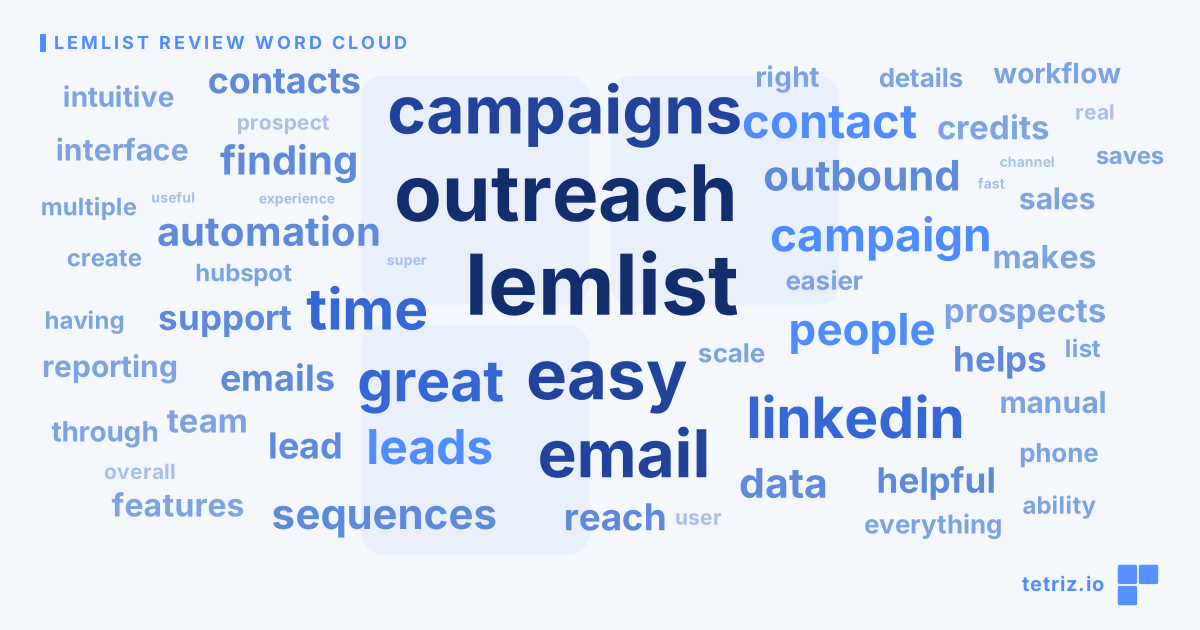
Lemlist made its name from GIF personalisation: a dynamic image where you drop a variable like a company logo or a screenshot with the prospect’s name. That kind of visual personalisation gives you a great reply rate.
Beyond the creative angle, Lemlist runs a native warm-up product (Lemwarm) that stands up well against the specialists, and a multichannel builder that mixes email with LinkedIn tasks.
Key Features
- Dynamic personalised images and videos in cold emails.
- Lemwarm native email warm-up for deliverability.
- Multichannel sequences (email + LinkedIn + manual tasks).
- AI writing assistant for first-line personalisation.
- Native CRM sync with HubSpot, Salesforce, and Pipedrive.
Best for teams whose competitive advantage is creative personalisation at the top of the funnel, particularly in outbound where reply rates are the metric that matters.
Watch for the credit model and reporting depth. Campaign-level analytics is thin compared to specialist outreach tools, and campaigns consume credits faster than expected.
Pricing starts at $32 per user per month for the Email Starter plan, with Email Pro at $55, Multichannel Expert at $79, and Outreach Scale at $129. Annual plans discount around 20 percent.
Instantly, from $37/mo
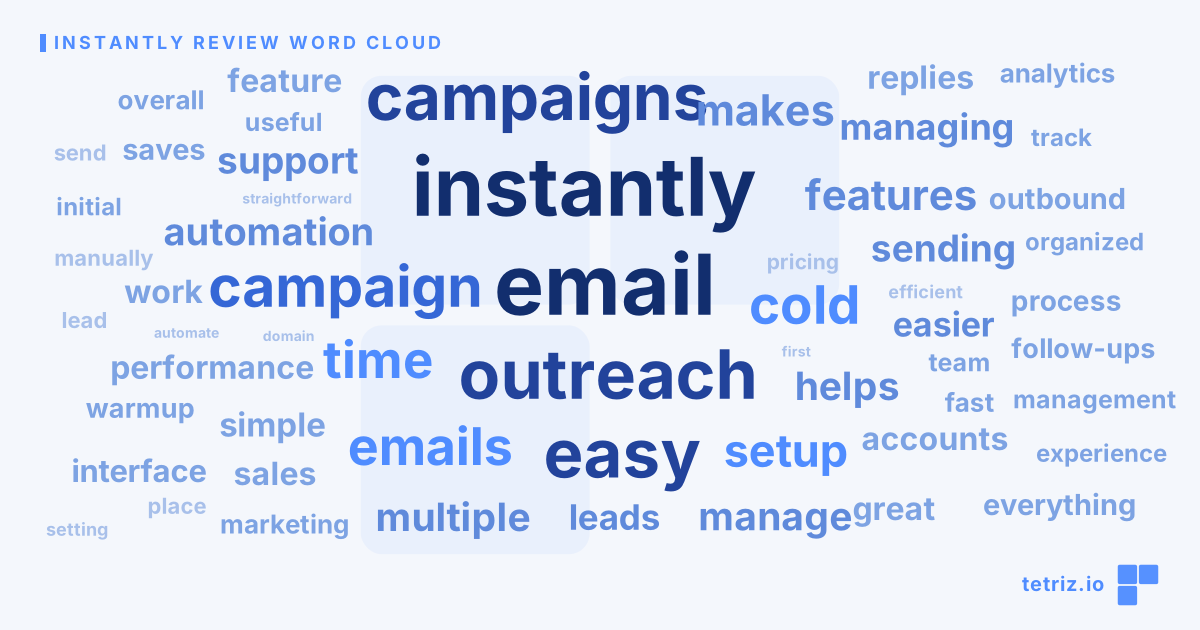
Instantly is built around one thesis: connect a lot of sending mailboxes, warm them all up, and rotate sends across them so no single inbox burns out. This is great for deliverability and can scale easily to high volumes. You pay per volume, not per user, which is a big improvement from Apollo’s per-seat pricing.
Reviewers describe deliverability as best-in-class among the sub-$100-per-month outreach tools, and warm-up as the reason they made the switch. What Instantly is other channel than email. If you want LinkedIn or calls in the same workflow, look elsewhere.
Key Features
- Unlimited email sending accounts on paid plans.
- Native warm-up network across every connected mailbox.
- IP rotation and inbox placement testing.
- Campaign builder with A/B testing and conditional logic.
- Basic CRM inside the tool for reply tracking and pipeline management.
Best for agencies sending high-volume cold email who want deliverability handled for them.
Watch for the channel scope. Instantly does not do LinkedIn, does not do calls. If you want multichannel, you will need to combine it with other tools.
Pricing starts at $37 per month for the Growth plan (1,000 active leads), with Hypergrowth at $97 and Light Speed at $358 for higher volumes. Add-ons for lead discovery and CRM are separate.
Expandi, from $99/mo
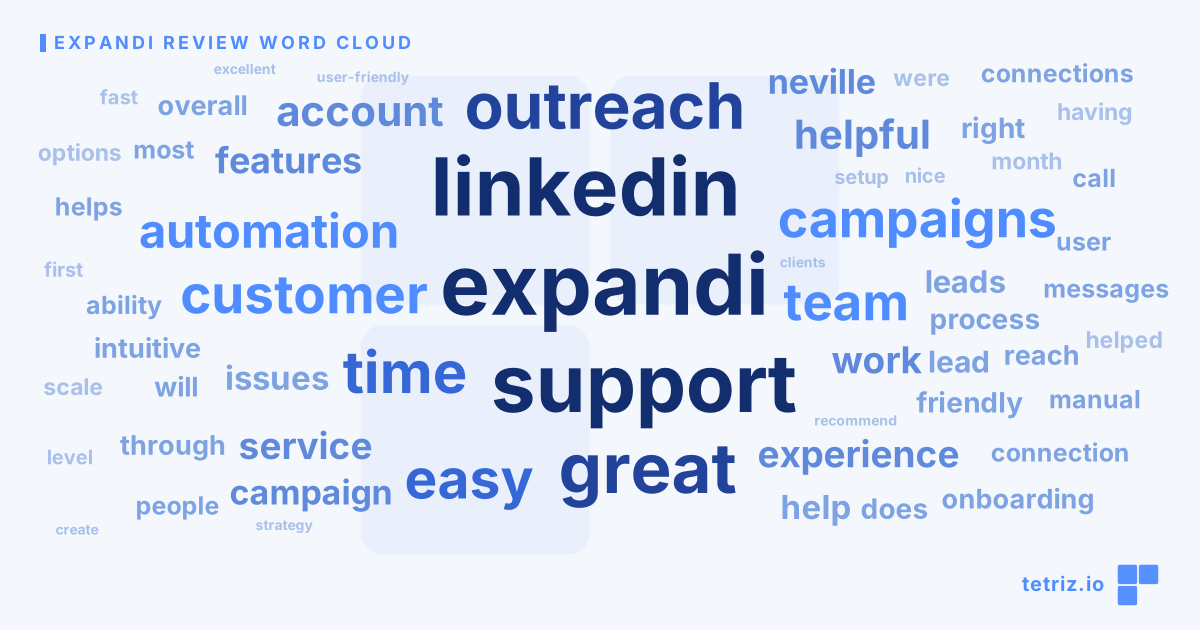
Expandi is a specialist tool: a cloud-based LinkedIn automation tool. Expandi runs from a dedicated IP tied to your LinkedIn session, throttles activity in a human-shaped pattern, and layers on smart delays so campaigns look organic. That keeps your LinkedIn account relatively safe.
The tool does not have a lead database of its own. You bring the list (usually from Sales Navigator or a CSV) and Expandi runs the outreach.
Expandi also extends to email outreach, but it stays a LinkedIn-first platform. Leads are deduplicated based on their LinkedIn profile, so you cannot send email to a lead if you don’t know their LinkedIn profile URL.
Key Features
- Cloud-based LinkedIn automation with a dedicated IP per user.
- Connection requests, follow-ups, InMails, and profile-view sequences.
- Smart delays and human-shaped activity patterns for account safety.
- Webhook triggers, Zapier integration, and API access.
- Team management with shared inboxes and campaign templates.
- Basic email automation
Best for teams whose highest-converting channel is LinkedIn and who already have a good lead source feeding it.
Watch for Even with Expandi’s guardrails, LinkedIn automation always carries some risk of restriction. Be reasonable with the scale of your automation.
Pricing starts at $99 per month per seat. There is no free tier, though a trial is available.
Check out our full Expandi review for more details.
Wondpecker €24/mo
The no-frills pure email outreach suite. If you don’t care about multichannel and run on a budget, this is the perfect fit.
Key Features
- Email outreach sequence
- Lead database deduplication
- Email warmup for deliverability
- Honeypot protection
Best for email outreach on a budget
Check out our full Woodpecker review to learn more.
How to choose
The right stack depends on which of the two Apollo jobs you are replacing, and what your team actually looks like.
If you already have an outreach tool you like and Apollo is failing you as a database, the shortlist is:
- Cognism for European coverage
- ZoomInfo if you have the budget and are selling North American enterprise
- Clay if you have a technical operator who can build enrichment workflows
- Lusha or LeadIQ if you want a Chrome-extension-first workflow
- RocketReach and UpLead if you run on a budget
- BookYourData if you are looking for pay-as-you-go pricing.
If Apollo is failing you on outreach and the database is fine, look at:
- Instantly for high-volume cold email
- Expandi for LinkedIn-focused outreach
- Snov.io if you want multichannel
- Lemlist for picture personalisation
If Apollo is failing you on both, you are probably rebuilding your stack. Most teams go for two tools:
- a database (Sales Navigator plus a reveal tool like Lusha or LeadIQ, or Cognism if the motion is EMEA-heavy)
- a specialist outreach tool (Instantly for volume, Lemlist for creative, Snov if you want both channels)
For teams that only need a database, resist the temptation to buy the biggest one. A 200-million-contact database you cannot filter down to the 500 accounts that matter is worth less than a 20-million-contact database with sharper segmentation and cleaner verification.
FAQs
Is Apollo actually a bad tool?
No. Apollo is a competent lead database and an acceptable outreach tool, and the free tier is genuinely useful for a solo founder. The problem is that most of its individual features are second-best in their own category. If you care most about database freshness, Cognism, ZoomInfo, or Lead411 beats it. If you care most about outreach deliverability, Instantly or Lemlist beats it. Apollo wins on “everything in one seat”, and loses when you push any single dimension.
Should I replace Apollo with one tool or two?
Almost always two, at least for teams beyond the founder stage. A database and an outreach engine are different products. Bundling them into one seat is a false economy that shows up in deliverability metrics six weeks later.
Which alternative is cheapest?
RocketReach at $19 per month and Datanyze at $21 per month are the cheapest per-seat databases in this roundup, and Woodpecker is the cheapest outreach tool. Cheapest is not always best; validate on a small paid pilot before you commit to a plan.
Which alternative is best for European outbound?
Cognism is the most-cited pick for European coverage across the reviews we pulled, with better mobile number depth in EMEA than Apollo, ZoomInfo, or Lusha. Lusha holds its own on emails but is thinner on European direct dials.
Do any of these tools do the full Apollo job in one seat?
Snov.io comes closest for small teams: email finder, verifier, cold outreach, and LinkedIn automation in one seat. It is not a full CRM replacement and does not have Apollo’s dialer, but for a lean team it covers more ground than any other single tool in this list.
Should I keep Apollo alongside one of these alternatives?
Often yes, at least during a transition. Apollo’s free tier is generous enough to keep for a specific job (contact reveal on LinkedIn, for example) while you move your outreach engine or your main database elsewhere. Cancelling only makes sense once the replacement tool has been running for a full quarter and you know you are not going back.